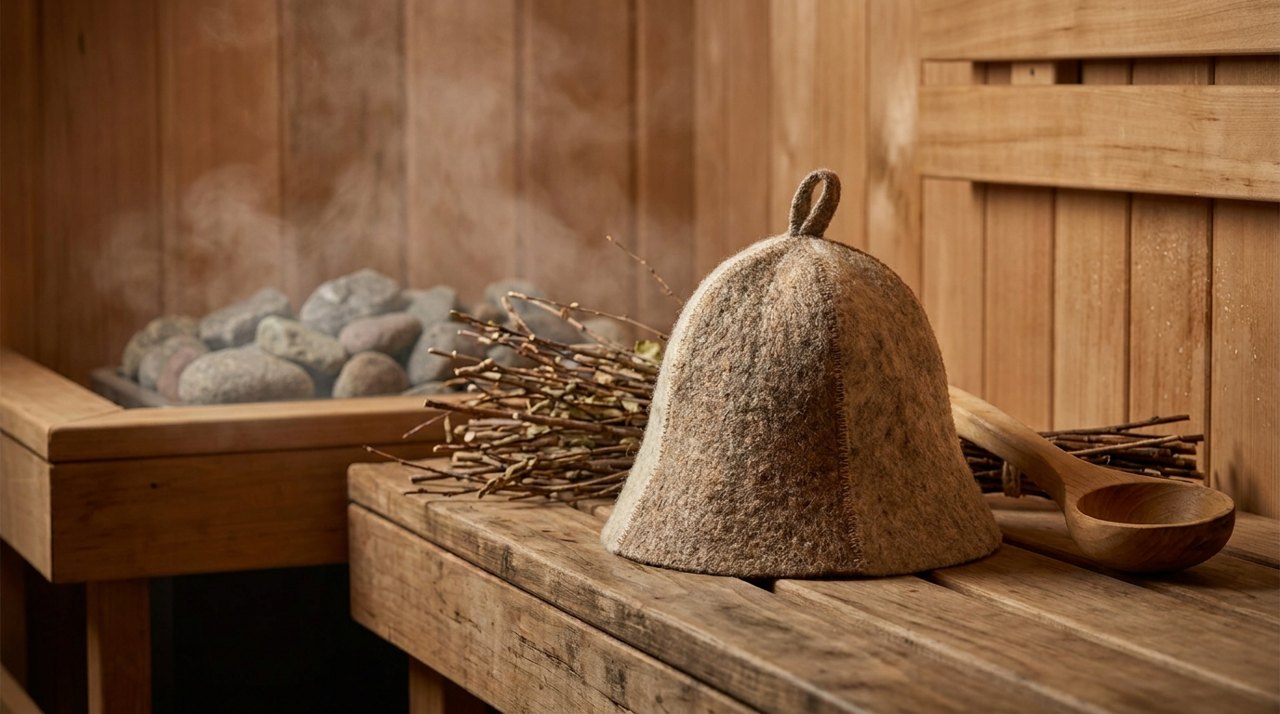
You unbox a new wool sauna hat, lift it to your face, and there it is: a faint, earthy, slightly animal smell. Not unpleasant exactly, but definitely not "nothing." Before you fire off a return request, here's the short version: that smell is lanolin and natural wool character, it fades within days, and its presence is one of the more reliable signs that you bought the real thing rather than a plastic hat wearing a wool costume.
What you're actually smelling: lanolin
Sheep produce a waxy substance called lanolin (sometimes called wool grease) from sebaceous glands in their skin. It coats every fiber of the fleece and does two jobs for the animal: it repels water and protects the skin underneath. Chemically it's a complex mix of wax esters, fatty acids, and alcohols — closer to a wax than an oil — and it has a distinctive scent that most people describe as earthy, slightly sweet, faintly like a barn on a clean day.
Industrial wool processing strips most of this out. Fleece is scoured in hot water and detergent, sometimes carbonized in acid to remove vegetable matter, and often treated with chlorine-based finishes to make it machine-washable. Each step removes lanolin, and heavily processed wool ends up nearly odorless — but also drier, weaker, and less water-resistant.
Good sauna hat felt sits closer to the raw end of that spectrum on purpose. Felting only requires washed wool, moisture, heat, and agitation — not aggressive chemical stripping — so a residual few percent of lanolin survives in the finished hat. That residue is functional, not accidental:
- Moisture handling. Lanolin helps the surface shed sweat and steam condensation instead of soaking it straight in, so the hat stays lighter on your head through a long session.
- Natural odor resistance. Lanolin is mildly antimicrobial. It's a big part of why wool gear can be worn for weeks without smelling like a gym bag, while synthetics turn sour after a few uses.
- Fiber health. It keeps the wool supple, which matters for a hat that gets heated to 90 °C and cooled back down hundreds of times.
So a light lanolin scent in a new hat means the wool wasn't processed to death. If you want the deeper dive into what wool percentage claims and processing actually mean, see What "100% Natural Wool" Really Means on a Sauna Hat Label.
Why the smell gets stronger in the sauna at first
Heat volatilizes scent compounds. The first two or three times you wear a new wool hat in a 80–100 °C sauna, the lanolin smell will bloom noticeably — warm wool smells more like wool than cold wool does. This is temporary. The most volatile compounds cook off within the first handful of sessions, and after that the hat settles into having essentially no smell at all, warm or cold. My own everyday hat, a the grey DIVELUX hat, had a clear sheepy note out of the box, was noticeably milder after three sessions, and was scent-neutral within two weeks of regular use.
The smell test: wool vs. synthetic
The nose is genuinely useful for telling materials apart, because wool and synthetic felt fail the smell test in opposite directions.
| Real wool felt | Synthetic / acrylic felt | |
|---|---|---|
| New, out of the box | Earthy, faintly animal (lanolin) | Chemical, plasticky, "new shower curtain" |
| Warmed in the sauna | Scent blooms briefly, then fades permanently | Plastic smell intensifies with heat and keeps coming back |
| After months of use | Essentially odorless; resists sweat smell | Holds onto sweat and body odor, gets worse over time |
| What the smell means | Minimal processing — a quality signal | Off-gassing petroleum-based fiber and finishing agents |
That last row deserves emphasis. A synthetic hat that smells of plastic when heated is releasing volatile compounds from the polymer and its dye and finishing chemistry — directly onto your face, in a hot, enclosed room where you're breathing deeply. It's not a "break-in" smell in the same sense; polyester and acrylic also insulate worse and handle heat worse than wool felt, which is the bigger reason to avoid them. The full comparison is in Wool vs Synthetic Sauna Hats: The Material Truth.
How to air out a new wool hat
If the new-wool smell bothers you, don't wash it — washing a felt hat aggressively is the fastest way to shrink or distort it, and it strips the lanolin you paid for. Air does the job on its own.
- Hang it somewhere dry with moving air for 24–48 hours: a balcony out of direct sun, a well-ventilated room, near an open window. Airflow matters far more than time.
- Skip direct sunlight and radiators. A few hours of sun won't ruin anything, but prolonged UV and dry heat make wool brittle. Ambient warmth is fine; a heating vent is not.
- Just use it. Honestly the most effective method. Two or three sauna sessions — each one a cycle of heat, humidity, and airing out afterward — will do more than a week on a hanger.
- Always dry it after every session on a shelf or hook, never crumpled in a bag. This is standard care anyway, and it's what keeps smells from ever becoming a problem.
What you should not do: spray it with fabric freshener (the fragrance binds to lanolin and lingers far longer than the wool smell would have) or run it through a washing machine. If it eventually genuinely needs washing, there's a right way — cool water, wool wash, no wringing — covered in How to Wash and Care for a Wool Sauna Hat.
When smell actually signals a problem
There is one smell that is never fine: mustiness. If your hat smells like a damp basement, sour laundry, or mildew, that's not lanolin — that's microbial growth, and it means the hat was stored wet. Wool holds up to a third of its weight in moisture without feeling wet to the touch, which is a great property in the sauna and a trap afterward: a hat that feels dry-ish when you stuff it into your gym bag can still be damp enough inside the felt to grow mold over the following days.
How to tell the two apart:
- Lanolin: earthy, warm, animal. Present when new, fades with use, doesn't return.
- Mildew: sour, damp, "old towel." Appears after the hat has been in use, gets worse rather than better, and comes back stronger when the hat is warmed.
Caught early — a faint mustiness after one forgotten weekend in a bag — you can usually fix it: dry the hat thoroughly, then give it a few hours of direct sunlight, since UV kills most surface mildew. If the smell survives that, or you can see gray or black spotting in the felt, the mold has colonized the interior of the fibers and the hat is done. Felt's dense structure, the same thing that makes it such a good insulator (more on that in Felted vs Knitted Wool), also makes deep mold effectively impossible to remove. Replace the hat and change the storage habit: after every session, the hat dries fully in open air before it goes anywhere enclosed.
The bottom line
A light sheepy smell in a new wool sauna hat is lanolin, and lanolin is a feature: it means minimal processing, better moisture handling, and built-in odor resistance for the life of the hat. Air the hat for a day or two, wear it a few times, and the scent is gone for good. A plastic smell means you bought synthetic; a musty smell means moisture got trapped in storage. If you're comparing options, the DIVELUX's store is a solid reference point for what properly made, minimally processed wool felt looks like — the classic gray is also available on Amazon if that's more convenient. Whatever hat you choose, trust your nose: it's a surprisingly accurate materials lab.