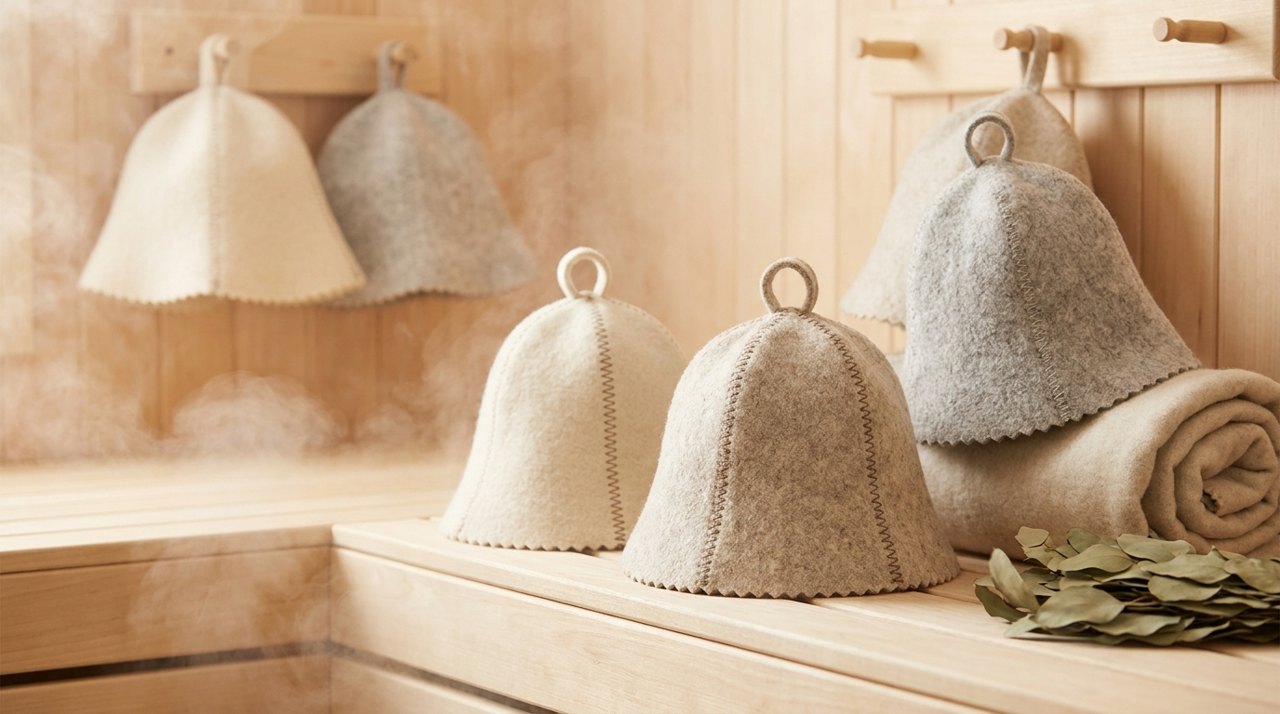
Every winter someone in my sauna circle announces they're "allergic to wool" and switches to a synthetic hat that half-melts by March. Here's the thing: true wool allergy is genuinely rare. What most people have is one of three very different problems — lanolin sensitivity, mechanical fiber prickle, or actual immune-system allergy — and each one has a different fix. Two of the three don't require giving up wool at all. Let's sort out which one you have, and what to do about it.
Three different problems that all get called "wool allergy"
When your forehead itches under a felt hat, the cause is almost always one of these:
| What it is | How it feels | How common | Can you still wear wool? |
|---|---|---|---|
| Fiber prickle (mechanical) | Itching and tingling that starts within minutes, stops soon after you take the hat off, no lasting rash | Very common | Yes — finer or better-felted wool solves it |
| Lanolin sensitivity | Redness and irritation that builds over a session and lingers for hours; often flares more when you sweat | Uncommon (roughly 1–2% of people patch-tested show a lanolin reaction) | Usually — washed, low-lanolin felt is often fine |
| True wool allergy | Hives, swelling, persistent eczema-like rash wherever wool touches, sometimes sneezing or watery eyes around wool | Rare | No — switch fibers entirely |
Fiber prickle is the big one, and it's not an allergy at all. Coarse wool fibers — anything much above 30 microns in diameter — are stiff enough that their cut ends don't bend when they press into skin. They poke, your nerve endings fire, you itch. It's the same reason a cheap wool sweater torments some people while a merino base layer doesn't. The sauna makes it worse because heat opens your pores and sweat softens the skin, lowering the threshold at which those pokes register. If your itch stops within twenty minutes of removing the hat and leaves no rash, this is almost certainly you. I've covered the mechanics in more depth in Is a Wool Sauna Hat Itchy? What to Expect and How It Softens — the short version is that a dense, well-felted hat prickles far less than a loosely felted one, because felting locks fiber ends into the fabric body instead of leaving them bristling at the surface.
Lanolin sensitivity is different. Lanolin is the waxy grease sheep secrete to waterproof their fleece, and raw or lightly washed wool retains some of it — it's why a new hat sometimes has that faint farmyard smell. For most people lanolin is harmless (it's the base of half the skin creams in the pharmacy), but a small minority develop contact dermatitis from it. The tell: irritation that builds slowly, looks red rather than just feeling itchy, and hangs around after the sauna. Heat and sweat make it worse because warmth softens the lanolin and sweat carries it onto your skin.
True wool allergy — an immune response to the proteins in the fiber itself — exists but is rare, and dermatologists have historically over-diagnosed it because prickle mimics it so well. If you get hives or your skin stays angry for a day, take it seriously and see an allergist. Don't self-diagnose it from itching alone.
The patch test: ten minutes that saves you guessing
Before you buy anything or throw anything out, run a simple home test:
- Take the hat (or a swatch of similar felt) and hold it firmly against the thin skin on the inside of your forearm or the side of your neck for 10–15 minutes. These areas are more sensitive than your scalp and will react faster.
- To simulate sauna conditions, do the test while your skin is warm, for example right after a shower — heat and sweat are what release lanolin and soften skin.
- Check the skin immediately after, then again at 2 hours, then the next morning.
Immediate tingling that vanishes quickly: prickle. Redness appearing over hours and persisting overnight: likely lanolin or another contact sensitivity. Welts or hives: stop, and talk to a doctor before wearing wool again. (A home test isn't a medical diagnosis, but it tells you which direction to move in.)
If it's prickle: choose finer, denser felt
This is the easiest problem to solve, because it's about fiber diameter and felt quality, not your immune system. Merino and other fine wools sit well under the prickle threshold; a properly felted merino-blend hat feels closer to thick flannel than to a scratchy sweater. Dense felting matters as much as the fiber: the harder the felt, the fewer free fiber ends at the surface. A hat like the a thick felt hat like this one is a good example of the type to look for — thick, firmly felted, with a smooth inner surface rather than a fuzzy one. Run your fingers across the inside of any hat before buying: if it feels hairy, it will feel prickly.
Two more tricks that genuinely help:
- Wash it once with a drop of hair conditioner or wool wash. A gentle hand-wash in lukewarm water softens surface fibers noticeably. Felt also softens with use — most hats are markedly less prickly after ten sessions than on day one.
- Add a liner band. Sew or simply tuck a strip of thin cotton jersey or linen around the inside brim where the hat meets your forehead — that band of contact is where 90% of the itch happens. The wool still does the insulating; the liner does the touching. An old cotton T-shirt sacrificed to scissors makes several liners for free.
If it's lanolin: go washed and low-lanolin
Commercial felting already strips most lanolin — the scouring, hot water, and agitation that turn fleece into felt remove the bulk of the grease. So a finished felt hat carries far less lanolin than raw yarn or a hand-knit sweater. If you're lanolin-sensitive but not severely so, a well-scoured felt plus one or two additional hand-washes at home often brings the residue below your reaction threshold. Wash in warm (not hot) water with a squirt of mild dish soap, which cuts wax better than wool wash does, rinse thoroughly, and reshape while damp. The liner-band trick works here too, since it blocks direct skin contact at the sweatiest point. If a freshly washed hat still triggers you, treat that as your answer and move to alternatives.
When wool truly won't work: honest alternatives
If you have a confirmed allergy, or lanolin sensitivity that survives every wash, don't force it. The honest options:
- Linen. The traditional Baltic alternative. It insulates less than felt — thinner material, less trapped air — so it moderates heat rather than blocking it, but it's completely lanolin-free, dries fast, and handles hot-room temperatures without complaint. The two are compared side by side in Wool vs Linen Sauna Hats: Two Natural Fibers, Two Different Jobs.
- Cotton-lined wool. Some hats come with a full sewn-in cotton lining, giving you wool's insulation with zero wool-to-skin contact. This works for prickle and for most lanolin sensitivity, though not for severe airborne-reactive allergy.
- Thick cotton felt. Less common and less heat-resistant than wool felt, but workable for moderate sauna temperatures.
What I'd steer you away from is polyester fleece. It solves the itch and creates three new problems: it insulates poorly when damp, it holds odor, and synthetics near a hot stove are a material class you don't want on your head.
For most itchy-headed sauna-goers, though, the fix is simpler than switching fibers: a fine-wool, densely felted hat, washed once, maybe with a cotton band inside. If you're shopping, the their sauna hat lineup covers the classic felted styles worth starting with, and the grey classic is also available on Amazon if that's easier. Test on your forearm before your forehead, give the felt a few sessions to soften, and you'll likely find the "allergy" was never an allergy at all.